
Introduction
Bathroom lighting is one of the most important and most frequently underestimated elements of bathroom design. The right lighting scheme does more than simply illuminate the room — it defines how you experience the space, affects how accurately you see yourself in the mirror, influences the apparent size and warmth of the room, and contributes significantly to the overall aesthetic. Poor bathroom lighting, by contrast, creates unflattering shadows, makes tasks like applying makeup or shaving unnecessarily difficult, and gives even a beautifully designed room a dull, uninviting quality.
The fundamental principle of good bathroom lighting is layering. A single overhead light, no matter how bright, casts downward shadows that are deeply unflattering and make task lighting around the vanity mirror inadequate. A well-designed bathroom lighting scheme typically includes at least three types of light: ambient (general illumination), task (focused light for the vanity and mirror area), and accent (highlighting architectural features or creating atmosphere). The interaction between these layers creates a bathroom that is both functional and visually beautiful.
This guide covers the best bathroom lighting ideas for every bathroom size and style, explaining the principles behind effective lighting design and providing concrete recommendations for fixture types, placement, colour temperature, and dimming options. Whether you are renovating a full bathroom or simply replacing some fixtures, the ideas here will help you create a lighting scheme that makes your bathroom look and function at its best.
Vanity and Mirror Lighting: The Most Important Zone
The vanity mirror area is the most task-critical lighting zone in any bathroom, and it is also where the most common bathroom lighting mistakes are made. Mounting a single light fixture directly above the mirror causes light to fall downward, creating shadows under the eyes, nose, and chin — exactly the opposite of what flattering task lighting requires. The ideal vanity lighting comes from the sides, ideally at approximately eye level, to illuminate the face evenly from both directions without shadows.
Side-mounted vanity sconces, positioned at roughly 65 to 70 inches from the floor (approximately eye level for most adults) and on either side of the mirror, are the gold standard for vanity task lighting. Hollywood-style mirror lighting — a single fixture or mirror with bulbs arranged entirely around the perimeter of the mirror — is the most flattering option because it provides even illumination from all directions simultaneously, eliminating shadows almost entirely. This style of lighting is particularly popular in bathrooms where makeup application is a daily task.
Lighted mirrors and mirror cabinets with integrated LED lighting are an increasingly popular choice that combines the mirror and task lighting in a single sleek unit. Many feature adjustable colour temperature so you can switch between warm light for morning routines and cooler, daylight-balanced light for makeup application. These integrated units are available in a range of sizes and styles, from simple backlit mirrors to sophisticated units with anti-fog technology and magnifying sections.
For larger bathrooms with double vanities, provide individual light sources for each user position rather than a single central fixture. Each person should have adequate task lighting for their own use without depending on light from the other side of the vanity. This might mean separate sconces beside each mirror section, or a long linear fixture that extends the full width of the double vanity.
Ambient and Ceiling Lighting Options
Ambient lighting provides the general illumination that allows you to navigate and use the bathroom comfortably. In smaller bathrooms, the ambient and task lighting may be provided by the same fixtures. In larger bathrooms, separate ambient lighting is important to ensure the entire room is well-lit beyond the vanity area. Recessed downlights (can lights) are the most common ambient lighting choice for modern bathrooms — they provide clean, unobtrusive illumination that works with any design style.
When installing recessed lights in a bathroom, use fixtures rated for wet or damp locations, depending on their proximity to the shower or tub. Lights directly above a shower or bathtub must be rated for wet locations. Lights elsewhere in the bathroom can use damp-location rated fixtures. Modern LED recessed lights use very little energy, last up to 25,000 hours, and are available in a range of colour temperatures to suit your preferences.
A decorative pendant light or chandelier above the bathtub (where ceiling height allows) is a luxurious touch that adds significant visual impact and character to a primary bathroom. This approach is particularly effective in bathrooms with high ceilings and freestanding soaking tubs. Ensure any pendant or chandelier used in a bathroom is rated for damp or wet locations as appropriate and is installed by a licensed electrician if you have any doubt about the electrical requirements.
Heated ceiling panels and heated towel rails with integrated lighting are newer products that combine comfort and functionality, though they represent a higher investment. In bathrooms with underfloor heating, the soft warmth from the floor combined with layered ambient and task lighting creates the closest residential approximation of a spa environment.
Accent Lighting and Atmosphere
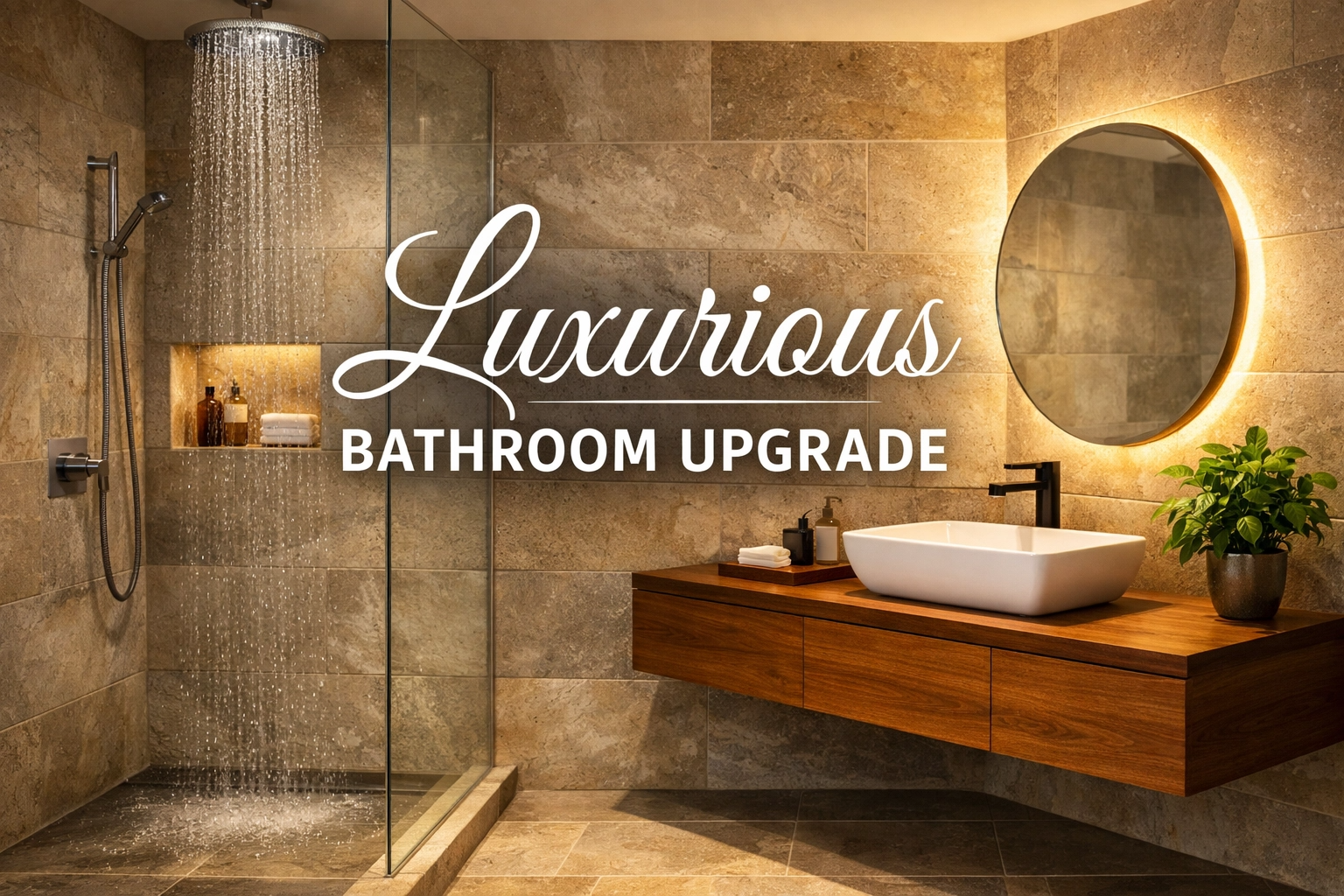
Accent lighting adds depth, dimension, and atmosphere to a bathroom beyond pure functionality. Under-vanity lighting — LED strip lights installed beneath a floating vanity — casts a soft glow onto the floor and creates a sophisticated, upscale effect. This type of lighting is particularly effective at night when the main lights are off or dimmed, serving simultaneously as a nightlight and a design feature.
In-shower or in-tub recessed lighting creates a more immersive, spa-like atmosphere. Lighting the shower wall from above or the side rather than relying solely on the main bathroom light draws the eye into the shower and makes the tile and finishes more visible and dramatic. Some homeowners incorporate linear LED fixtures at the base of niches or around the perimeter of the shower ceiling for a contemporary architectural effect.
Dimmer switches are one of the most cost-effective and impactful bathroom improvements available. Installing dimmers on all bathroom lights — vanity, ambient, and accent — allows you to transition from bright, task-oriented lighting during morning routines to soft, relaxing illumination for an evening bath. The ability to adjust light levels makes a single bathroom feel like it can serve multiple purposes and moods. Ensure your dimmers are compatible with the LED bulbs you have installed, as not all dimmers work correctly with all LED types.
Frequently Asked Questions About Bathroom Lighting
What colour temperature is best for bathroom lighting?
The ideal colour temperature for bathroom lighting is 2700K to 3000K for a warm, flattering light that resembles the qualities of incandescent bulbs. This range is particularly effective for vanity lighting as it is more flattering to skin tones than cooler light. If you require accurate colour rendering for makeup application, a slightly cooler 3500K to 4000K “neutral white” can be beneficial. Avoid very cool “daylight” bulbs in the 5000K to 6500K range for bathroom vanity lighting — they tend to be harsh and unflattering.
How bright should bathroom lighting be?
For a general guideline, bathrooms should have approximately 75 to 100 lumens per square foot for a well-lit room. The vanity area specifically needs adequate task lighting — typically a vanity fixture or sconces producing 1,500 to 2,500 lumens total, depending on the size of the mirror and vanity. With dimmers installed, you can have the flexibility of full brightness for task-oriented activities and reduced light for relaxation. Modern LED fixtures make it easier to achieve high lumen output with low energy consumption.
Should bathroom lights be warm or cool?
Warm white light (2700K to 3000K) is generally preferred for bathrooms because it creates a comfortable, relaxing atmosphere and is flattering to skin tones. Cool white or daylight-balanced light can be appropriate for spaces where accurate colour rendering is important, such as when applying makeup, but as the primary bathroom lighting choice it tends to feel clinical and harsh. A good solution is to use warm white for ambient and decorative lighting and have a cool-white option available at the vanity via a switchable or adjustable lighted mirror.
How do I add bathroom lighting without rewiring?
Battery-operated LED lighting has improved dramatically in recent years, making it possible to add accent lighting — under-vanity lights, night lights, lighted mirror frames — without any electrical work. Plug-in sconces can be used beside mirrors where there is a nearby outlet. Many vanity light fixtures can be swapped for alternative styles without rewiring as long as the new fixture uses the same electrical box. For any installation involving new wiring, circuits, or fixtures near water sources, consult a licensed electrician to ensure safety compliance.
Can I install bathroom lighting myself?
Replacing like-for-like fixtures (same type, same box location) is generally within the capabilities of a confident DIYer who is comfortable working with electrical systems and follows basic safety precautions (turning off the circuit breaker before beginning work). Installing new circuits, moving fixtures to new locations, or adding lights near shower or tub areas involves more complex electrical work that may require permits and should be performed by a licensed electrician in many jurisdictions. When in doubt, hire a professional — electrical mistakes in wet environments are serious safety hazards.
Final Thoughts
Bathroom lighting is one of those elements of home design that seems simple until you experience the dramatic difference between a poorly lit and a brilliantly lit bathroom. By applying the principles of layered lighting — combining ambient, task, and accent sources — and paying attention to colour temperature, fixture placement, and dimming flexibility, you can transform even a modest bathroom into a space that looks and feels exceptional.
The investment in good bathroom lighting is disproportionately rewarding compared to its cost. In many cases, replacing a single unflattering overhead fixture with well-positioned vanity sconces and adding a dimmer switch costs just a few hundred dollars but delivers a visible improvement that you will appreciate every single day. Start with the vanity area, which has the greatest impact on daily use, and work outward from there.
Sources & Further Reading
- Illuminating Engineering Society (IES) — ies.org
- The Spruce: Bathroom Lighting Ideas and Tips — thespruce.com
- Architectural Digest: Bathroom Lighting Guide — architecturaldigest.com

Mark Henderson
certified home improvement specialist
Mark Henderson is a certified home improvement specialist and DIY enthusiast with over 15 years of hands-on experience in residential renovation and repair. A former licensed contractor based in Austin, Texas, Mark has completed hundreds of home projects ranging from bathroom remodels to full kitchen renovations. He writes to help homeowners tackle projects confidently and safely.